The Wolverine Stack combines BPC-157 and TB-500 into a single recovery protocol that high performers, athletes, and rehabilitation patients are increasingly asking about. This guide explains what each peptide does, how they work together, and what the current evidence actually supports.
Introduction
The Wolverine Stack gets its name from the Marvel character’s near-instant healing ability. It pairs two research peptides, BPC-157 and TB-500, in a protocol designed to support tissue repair, reduce inflammation, and accelerate recovery from injury.
Interest in peptide therapy has grown sharply across functional medicine, physical therapy, and athletic performance communities. Patients dealing with chronic pain, tendon injuries, or post-surgical rehabilitation are asking their providers about these compounds more than ever. This guide explains the basics of each peptide, how the stack is structured, what the evidence says, and the current legal landscape in the United States as of 2026.
What Is the Wolverine Stack?
The Wolverine Stack is the informal nickname for combining BPC-157 and TB-500 in a single recovery-oriented research protocol. The name comes from pop culture, not clinical literature.
The two peptides play distinct roles in the protocol:
- BPC-157 (local repair): Targets the injury site directly, supporting angiogenesis and local vascular repair signaling.
- TB-500 (systemic repair): Supports broader tissue remodeling and cell migration throughout the body.
- Combined rationale: The stack addresses different stages of the healing cascade simultaneously, which is the basis for combining them.
- Regulatory status: Neither peptide is FDA-approved. Both are consistently described as experimental research compounds across 2025 and 2026 sources, per MedicalSparx.
Inside the Stack: BPC-157 and TB-500 Explained
These two peptides are structurally and mechanistically distinct. Understanding each one separately makes the rationale for combining them much clearer.
BPC-157: The Gut and Tissue Repair Peptide
BPC-157 is a synthetic 15-amino-acid peptide. Its core mechanisms include VEGFR2-related angiogenesis, FAK/paxillin signaling, and nitric oxide pathway modulation, all of which support local vascular repair, according to PeptidesLabUK.
A 2025 systematic review published in SAGE Journals screened 544 articles published between 1993 and 2024. Researchers included 36 studies total, of which 35 were preclinical and only 1 involved human subjects, per SAGE Journals. That ratio reflects where the evidence currently stands.
TB-500: The Cellular Mobility Peptide
TB-500 is a synthetic research peptide based on thymosin beta-4 biology. Its defining mechanism is binding and sequestering G-actin, which regulates actin cytoskeletal dynamics to drive cell migration into injured tissue, according to Baltic Bio Labs.
Published human data for TB-500 are weaker than those for BPC-157. Available clinical evidence largely comes from studies on full-length thymosin beta-4, not the synthetic TB-500 fragment sold commercially. Those studies focused on ophthalmic and cardiac indications, not musculoskeletal repair, per BSCG.
Why Combine Them: The Synergy Behind the Stack
The theoretical case for stacking these two peptides rests on their complementary mechanisms. Each addresses a different phase of tissue healing.
How the Two Peptides Support Each Other
BPC-157 supports angiogenesis and local repair signaling. TB-500 supports cell migration and tissue remodeling. Together, they are thought to address different but overlapping stages of the healing cascade, making the combination potentially additive in mechanism.
“The most defensible claim is that the two peptides address different parts of the healing cascade.” – Peptpedia Research
No published controlled human trial has tested the BPC-157 and TB-500 combination directly. The claimed synergy remains mechanistically plausible but experimentally unconfirmed.
Who Benefits Most from the Combined Protocol
The stack is most commonly used by athletes recovering from tendon or ligament injuries, patients in post-surgical rehabilitation, and individuals managing chronic joint pain or soft-tissue dysfunction. GlobalRPH noted in November 2025 that the combination protocol is widely used in functional medicine and biohacking communities, despite the absence of combination-specific randomized controlled trials.
Benefits of the Wolverine Stack for Recovery
Recovery-focused use cases drive most interest in this stack. The preclinical evidence is more robust than the human evidence, but practitioners cite consistent patterns across both.
Key reported and researched benefits include:
- Inflammation reduction: The 2025 SAGE Journals systematic review reported reductions in inflammatory markers including IL-6 and TNF-alpha in preclinical models.
- Functional recovery: The same review noted improvements in functional, structural, and biomechanical outcomes across included studies.
- Pain relief: A retrospective pilot in 12 chronic knee-pain patients found that 7 of 12 (58%) reported pain relief lasting more than 6 months following a single intra-articular BPC-157 injection, per OathResearch.com.
- Tendon and ligament support: Both peptides are frequently cited for soft-tissue repair in athletic injury contexts.
- Market demand signal: The BPC-157 standalone market was estimated at $0.3 billion in 2025, projected to reach $0.6 billion by 2034, per MarketIntelo, reflecting strong rehabilitation-driven demand.
A May 2026 report from MedicalXpress noted that overall human evidence for BPC-157 and TB-500 recovery use remains sparse and low quality, with no robust controlled trials proving benefit in sports or orthopedic injuries.
Dosing and Cycling the Wolverine Stack
Dosing information for the Wolverine Stack comes from research community protocols, not clinical guidelines. No human trial has established optimal dose, route, or cycle length for the combination.
Common Dosing Patterns (Educational Reference)
The most widely cited practitioner protocol for 2025 and 2026 is structured as follows:
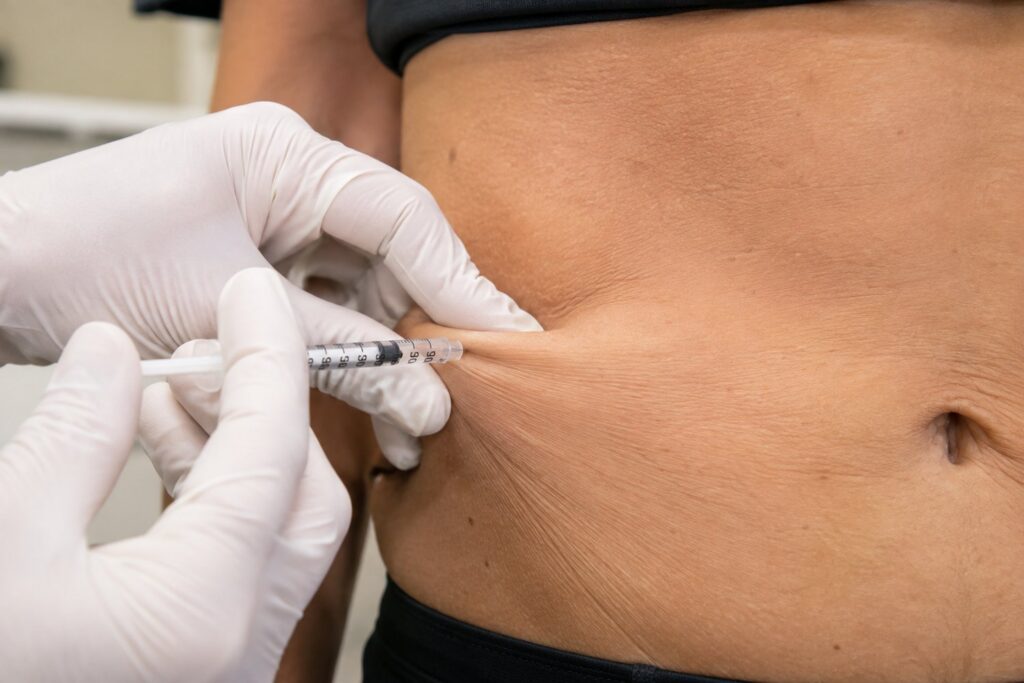
- BPC-157 loading dose: 250 to 500 mcg subcutaneously once daily, administered near the injury site when possible, for 4 to 8 weeks.
- TB-500 loading phase: 2.0 to 2.5 mg twice weekly for 4 to 6 weeks.
- TB-500 maintenance phase: 2.0 to 2.5 mg once weekly for an additional 4 to 8 weeks.
- Off-period: At least 4 weeks after the active cycle, with many guides recommending a 1:1 on-to-off ratio before repeating.
These are research-community dosing suggestions only. A licensed prescriber should guide any clinical application of these compounds.
Safety Profile and Potential Side Effects
The safety profile of the Wolverine Stack is not established through controlled human trials. Available information comes from individual peptide profiles and regulatory agency statements.
Key safety considerations include:
- Common mild effects: Injection-site pain, redness, or swelling; headache; nausea or GI upset; fatigue; and dizziness are the most frequently reported adverse effects, per GlobalRPH.
- FDA safety concerns: The FDA has stated that compounded drugs containing BPC-157 and thymosin beta-4 fragment may present significant safety risks, citing immunogenicity, aggregation, and peptide impurities.
- Angiogenesis risk: Compounds influencing blood-vessel growth could theoretically stimulate growth of undiagnosed tumors. This is flagged as a contraindication concern for individuals with active or undiagnosed malignancy, though it has not been documented as a human clinical signal, per MDPep.
- International warning: Australia’s TGA has linked unapproved peptide products to serious adverse effects including liver damage and severe allergic reactions requiring hospitalization.
- Combination data gap: No controlled human trials evaluating BPC-157 and TB-500 together have been published. Combination safety is inferred, not established.
Are BPC-157 and TB-500 Legal in the US? The 2026 Update
The regulatory picture shifted meaningfully in mid-2026. On July 23, 2026, Reuters reported that an FDA advisory panel voted 8 to 6 to recommend placing TB-500 on a list that would allow broader pharmacy compounding. That vote concerns compounding eligibility only, not FDA approval or a safety determination.
A separate Reuters report from the same day confirmed that FDA advisers were weighing restrictions on seven peptides while industry stakeholders pressed for expanded legal compounding access. As of 2026, neither BPC-157 nor TB-500 holds FDA approval for any therapeutic indication. BPC-157 is also listed by USADA as a prohibited substance in sport, per USADA.
Integrating the Stack with Physical Therapy and Rehab
Across 2025 and 2026 practitioner guides, the consistent message is clear: the Wolverine Stack is an adjunct to rehabilitation, not a replacement for it. Physical therapy remains the primary driver of functional recovery.
A structured rehab-phase model cited in peptide recovery literature describes three integration stages:
- Early phase: Rest, pain-free range of motion, and avoiding aggravation of the injury site.
- Mid-phase: Progressive range of motion, isometrics, and proprioception work. The peptide stack is positioned as a support tool during this window, per TheJOPS.com.
- Late phase: Resistance training, eccentric loading, sport-specific drills, and return-to-sport progression.
At Balanced Flow, physical therapy and rehabilitation remain the foundation of every recovery protocol. Peptide therapy, where appropriate and legally accessible, is considered a potential adjunct within a broader medgym and regenerative medicine framework.
What the Wolverine Stack Can and Cannot Do
Setting accurate expectations matters. The research-community enthusiasm for this stack often outpaces what the evidence actually supports.
The current evidence clearly defines the boundaries:
- Cannot be called proven effective in humans: No published controlled human trial has tested the BPC-157 and TB-500 combination for musculoskeletal injury or athletic recovery, per Peptpedia Research.
- Cannot establish synergy: The combination has never been studied head-to-head against either peptide alone in a rigorous design, per PureTested Peptides.
- Cannot define optimal dosing: Dose, duration, route, and cycling frequency have never been clinically defined for the combination in peer-reviewed human studies, per Spectrum Healthcare AU.
- Cannot replace approved therapies: Comparative efficacy versus established orthopedic, surgical, or physical therapy care has not been demonstrated, per Lifetime Surgical.
GlobalRPH concludes that the stack “cannot currently be described as a proven regenerative therapy,” characterizing it instead as a mechanistically plausible but experimentally unconfirmed research idea.
Conclusion
The Wolverine Stack represents one of the more scientifically grounded concepts in the peptide therapy space. BPC-157 and TB-500 target genuinely different phases of tissue repair, and the mechanistic rationale for combining them is coherent. The preclinical evidence is encouraging, even if human data remain limited.
For patients and high performers exploring recovery options, the stack may have a role as a support strategy within a structured rehabilitation program, but it does not replace physical therapy, medical oversight, or evidence-based care. Working with a qualified provider is essential before pursuing any peptide protocol.
Frequently Asked Questions
What happens if someone with an undiagnosed condition uses the Wolverine Stack?
Individuals with undiagnosed malignancy face a theoretical risk because both peptides influence angiogenesis, the process of new blood vessel formation. Stimulating that process in the presence of an undetected tumor is a recognized contraindication concern. The FDA has also flagged immunogenicity and peptide impurity risks for compounded forms. Anyone with an unresolved health condition should consult a physician before considering this protocol.
Are BPC-157 and TB-500 the same compound?
No. They are structurally and mechanistically distinct. BPC-157 is a 15-amino-acid gastric-derived peptide that works through VEGFR2-related angiogenesis and nitric oxide pathways. TB-500 is a synthetic fragment related to thymosin beta-4, with its primary action being G-actin binding and cell migration regulation. Their different mechanisms are precisely the reason practitioners combine them, per Peptide-DB.
How does the Wolverine Stack compare to GHK-Cu or KPV peptides?
The Wolverine Stack focuses specifically on tissue repair and cell migration. GHK-Cu targets collagen synthesis and skin-level regeneration, while KPV is primarily associated with gut inflammation and immune modulation. Some extended protocols combine all four, as described by Preferred Regen. The Wolverine Stack remains the most widely used two-peptide combination for musculoskeletal recovery.
Can someone get the Wolverine Stack through a licensed provider?
Some compounding pharmacies and functional medicine practitioners offer BPC-157 and TB-500 in prescribed formats. The July 2026 FDA advisory panel vote may expand legitimate compounding access for TB-500, though a licensed prescriber remains essential. BPC-157 is separately listed as a prohibited substance by USADA for competitive athletes, which adds a layer of consideration for anyone subject to anti-doping rules.
How long does a typical Wolverine Stack cycle take to show results?
Most community protocols run a combined active cycle of 8 to 12 weeks, including the TB-500 loading and maintenance phases. Practitioners typically recommend evaluating progress at the 4-week mark before extending. Results vary considerably based on injury type, severity, and whether the protocol runs alongside active physical therapy and rehabilitation. No clinical trial has established a defined response timeline for the combination.