Short answer: To relieve sciatica pain, keep moving gently instead of resting in bed, use positions that take pressure off the nerve, try heat and gentle nerve glides, and work on the strength and movement patterns that overloaded your disc. Some common fixes work less well than people expect: bed rest doesn’t speed recovery, a widely prescribed nerve-pain medication did no better than placebo in a major trial, and epidural cortisone injections give only a small, short-term benefit. Lasting relief comes from calming the nerve and fixing what irritated it.
In about twelve years of treating sciatica at Balanced Flow, the Chicago clinic I founded, I’ve seen people arrive after trying everything on the list: rest, pills, stretches from the internet, an injection or two. Some of it helped for a while. Very little of it changed the trajectory. Here’s what the research says actually moves the needle, and what to do today.
Why does sciatica hurt so much?
Sciatica is nerve pain. A nerve root in your lower back gets compressed or inflamed, usually by a disc, and the pain travels along the nerve down the back of your leg. Nerve pain burns, shoots, and zaps, and it’s often worse in the calf or foot than in the back. It’s also easily provoked: sitting, bending, coughing, or stretching the wrong way can send it down the leg in an instant.
Relief comes from two directions: calming the irritated nerve now, and removing the load that keeps irritating it.
What can I do right now to relieve sciatica pain?
Keep moving, gently
It’s tempting to lie down until it passes. Don’t. In a randomized trial of 183 people with sciatica, two weeks of bed rest led to no better results than skipping bed rest, both at two weeks and at three months.1 Short, easy walks and staying as normally active as your leg allows are a better default.
Find the position that eases your leg
Most people get relief lying on their side with a pillow between their knees, or on their back with pillows under their knees, which takes tension off the sciatic nerve. Break up sitting often, because long stretches of slumped sitting tend to aggravate disc-related sciatica. I cover positions in detail in how to sleep with sciatica.
Use heat for guarded muscles
Heat on the low back or buttock for 15 to 20 minutes can relax the muscles that tighten up around an irritated nerve. It won’t fix the cause, but it can make moving easier, and moving matters.
Try gentle nerve glides instead of hard stretches
An irritated nerve doesn’t like being stretched, which is why aggressive hamstring stretching often makes sciatica worse. Nerve glides move the nerve back and forth without pulling it tight. A 2023 meta-analysis of 20 randomized trials with 877 participants found that this kind of neural mobilization significantly reduced pain and disability in people with lumbar radiculopathy.4 The studies varied a lot, so treat that as promising rather than proven, and learn the technique from a clinician so you’re working at the right level.
What exercises help relieve sciatica?
Early on, the right exercise is the one that calms your leg, not the one that works your back hardest. A few principles guide what we use.
Watch where the pain goes. If a movement makes leg pain retreat up toward your back, even if your back feels it more, that’s usually a good sign. If a movement pushes pain further down your leg, stop it for now. That one rule screens out a lot of well-meaning but wrong internet stretches.
Start with nerve glides. A common version: sit tall on a chair, then slowly straighten one knee while tipping your head back, then bend the knee while bringing your chin down. The nerve slides without being pulled tight at both ends. It should feel like mild tension, never a sharp zap.
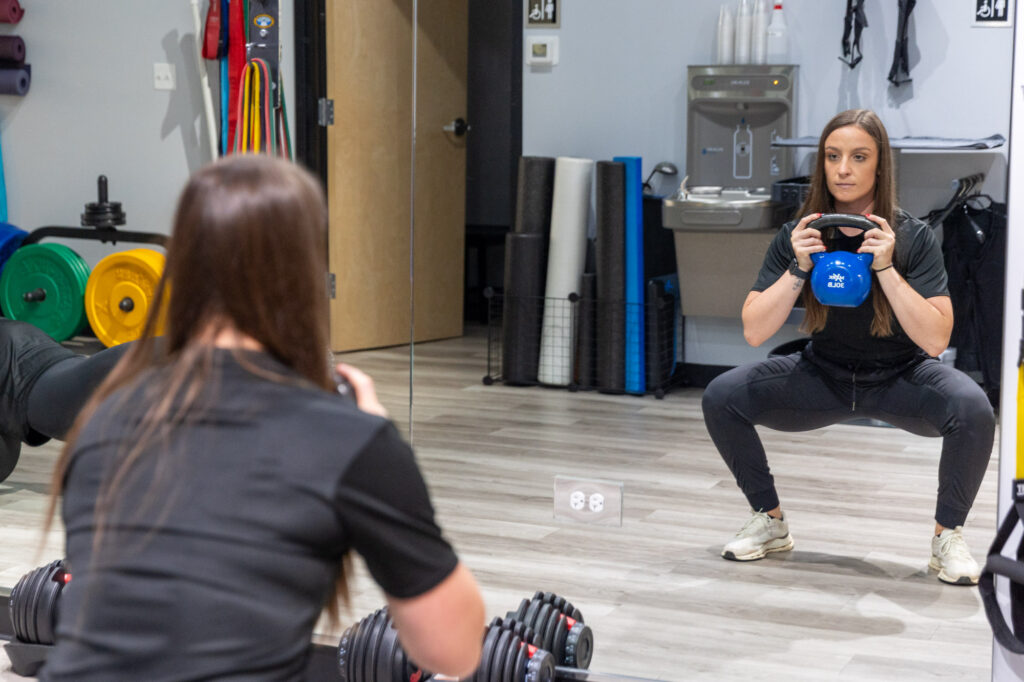
Wake up the glutes. Lying on your back with knees bent, gently squeeze your glutes and lift your hips a few inches, as long as it doesn’t send pain down the leg. Side-lying leg lifts and clamshells do the same job with less spine movement.
Build trunk endurance before strength. Short holds that keep the spine still, like a modified side plank from the knees, teach the core to support the disc without loading it.
Progress as the leg allows. The goal over weeks is to return to bending, lifting, and long walks with a body that shares the work properly, not to avoid those things forever.
Do medications help sciatica?
They can take the edge off for some people, but the research is more sobering than most expect. In a major trial of more than 200 people, pregabalin, a nerve-pain medication commonly prescribed for sciatica, did no better than placebo for leg pain at eight weeks or at one year, and it caused more side effects, especially dizziness.2 For recent sciatica, a 2025 network meta-analysis of 40 trials found that anti-inflammatory medication combined with physical therapy modalities was among the more effective short-term options, but the confidence in all of the evidence was very low.5
Medication decisions belong with your physician. What the research makes clear is that pills alone are unlikely to be the answer.
Do cortisone injections help sciatica?
An epidural cortisone injection delivers a steroid near the inflamed nerve root. A Cochrane review of 25 trials found these injections probably reduce leg pain and disability slightly compared with placebo in the short term, but the effects were small enough that many patients and clinicians might not consider them meaningful.3 For some people, that short window of relief makes it possible to move and do rehab, which is a fair use.
We’re not opposed to injections at Balanced Flow. We give several types, including regenerative options, and we use them when an injury isn’t responding to physical therapy the way it should or when we want to accelerate recovery. But no injection changes the mechanics that keep loading the disc. It buys time. What you do with that time decides whether the pain comes back.
What actually gives lasting relief?
Fixing the reason the disc got overloaded. For most people with sciatica, that story looks familiar. Hours of sitting with the hips bent. Glutes that have stopped driving hip extension, so the low back bends and lifts in their place. A stiff hip that forces the spine to move instead. A core that doesn’t support the spine during a normal day. Every bend and long drive adds stress to the same disc until it irritates a nerve.
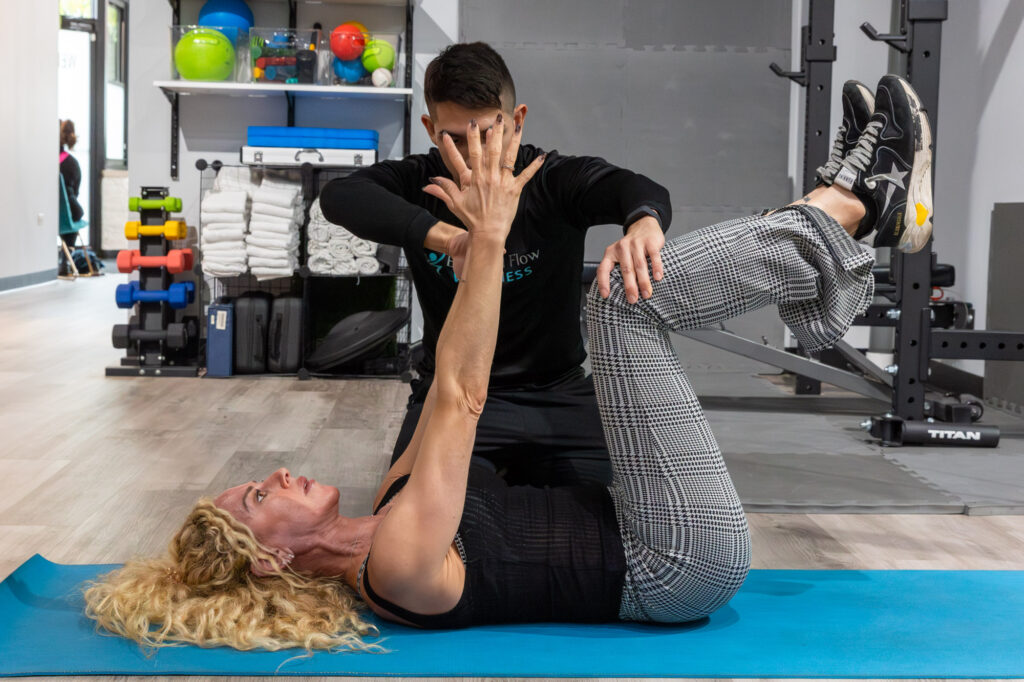
Lasting relief means changing that. Restore hip mobility. Retrain the glutes. Build trunk endurance. Change how you sit, bend, and lift. And progress gradually, so the disc gets stronger rather than flared. Hands-on treatment can help along the way, and I break down what spinal manipulation can and can’t do in can a chiropractor help with sciatica.
How we relieve sciatica at Balanced Flow
Most people judge their sciatica by feel: better today, worse yesterday. We measure. We test how the nerve responds to movement, check strength and reflexes, look at how your hips and low back share the work, and look at what your days actually load. Then we build a plan from what we find: calm the nerve first, then rebuild the movement and strength that protect it. Done right, the goal isn’t just relief. It’s a back that doesn’t keep sending you down this road.
When is sciatica an emergency?
Get emergency care right away for new trouble controlling your bladder or bowels, numbness in the groin, inner thighs, or around the anus, or weakness in both legs. These can signal cauda equina syndrome. Also get seen promptly for leg weakness that’s getting worse, such as a foot that’s starting to drag, sciatica with fever, or sciatica with a history of cancer or unexplained weight loss.
The bottom line
The fastest relief comes from gentle movement, smart positioning, heat, and nerve glides, with medication or a cortisone injection as short-term support if your physician recommends them. The lasting relief comes from fixing why the nerve got irritated. Many people recover well, and you can read about realistic timelines in how long does sciatica last.
If you’re in the Chicago area and you’ve tried everything for your sciatica without lasting relief, that’s the problem we solve at Balanced Flow. Book a consult and let’s find what’s driving it.
Frequently asked questions
What is the fastest way to relieve sciatica pain?
For quick relief, change position often, walk gently, use heat, and find a resting position that eases the leg, usually side-lying with a pillow between the knees or on your back with knees supported. For lasting relief, the cause needs to be addressed.
Should I stretch for sciatica?
Be careful with hard stretches, especially hamstring stretches, which can pull on an irritated nerve and flare symptoms. Gentle nerve glides, taught by a clinician, are usually a better choice early on.
Is ice or heat better for sciatica?
Many people prefer heat for the muscle tightness that comes with sciatica. Some find ice helpful in the first days of a flare. Use whichever eases your symptoms and helps you keep moving.
When should I see a doctor for sciatica?
Right away for bladder or bowel changes, groin numbness, or weakness in both legs. Promptly for worsening leg weakness, fever, or a history of cancer. And if your sciatica isn’t clearly improving after a few weeks, get a proper assessment.
References
1. Vroomen PC, et al. Lack of effectiveness of bed rest for sciatica. New England Journal of Medicine. 1999;340(6):418-423. doi:10.1056/NEJM199902113400602
2. Mathieson S, et al. Trial of Pregabalin for Acute and Chronic Sciatica. New England Journal of Medicine. 2017;376(12):1111-1120. doi:10.1056/NEJMoa1614292
3. Oliveira CB, et al. Epidural corticosteroid injections for lumbosacral radicular pain. Cochrane Database of Systematic Reviews. 2020;4(4):CD013577. doi:10.1002/14651858.CD013577
4. Lin LH, et al. Neural Mobilization for Reducing Pain and Disability in Patients with Lumbar Radiculopathy: A Systematic Review and Meta-Analysis. Life. 2023;13(12):2255. doi:10.3390/life13122255
5. Zhu Z, et al. Effectiveness of Nonsurgical Interventions for Patients With Acute and Subacute Sciatica: A Systematic Review With Network Meta-Analysis. Journal of Orthopaedic and Sports Physical Therapy. 2025;55(6):1-12. doi:10.2519/jospt.2025.13068